
If you have been seeing an osteopath for a while, you already know the treatment table is not about quick fixes or dramatic techniques. What often surprises people is how much advanced anatomical knowledge, physiological understanding, and finely tuned clinical skill sit behind what looks like calm, hands-on care.
If it has been a while since your last session, or something new has been niggling away, you can always call us here at Body@Boronia on (03) 9762 9445 to talk through whether an appointment might be useful right now.
Every session starts with clinical context
Even for long-term patients, no two sessions are the same. Bodies adapt, loads change, old injuries resurface, and stress shows up in different ways. An osteopath begins by updating the clinical picture, exploring what has shifted since your last visit and how your body has been responding to daily demands.
This ongoing dialogue matters. Pain and dysfunction rarely exist in isolation, and understanding patterns over time helps guide treatment choices rather than repeating a set routine.
Assessment goes far beyond where it hurts
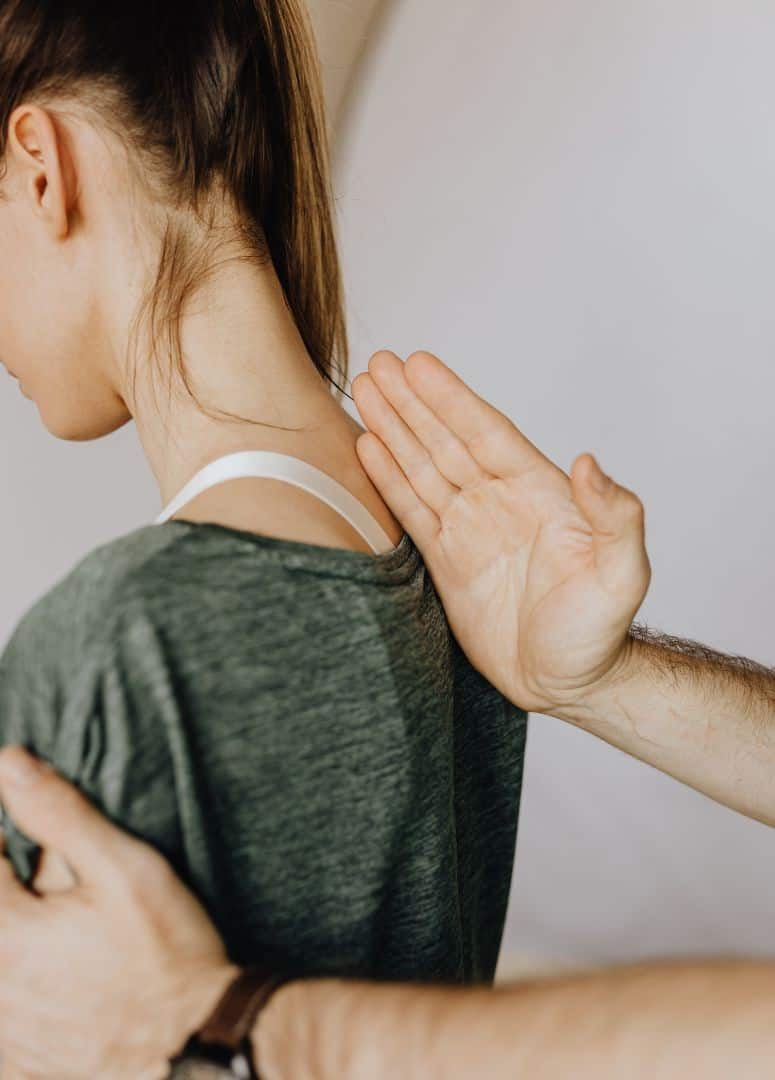
Observation and hands-on assessment remain central. Subtle changes in posture, breathing patterns, joint mobility, or tissue tone can reveal why a familiar issue feels different this time around.
Osteopaths use highly developed palpation skills to assess movement quality, tissue responsiveness, and how different regions of the body interact. Often, the most clinically relevant findings sit away from the area of pain itself, reflecting compensatory strategies rather than local damage.
Treatment is responsive, not formulaic
Osteopathic treatment evolves moment by moment. Techniques are selected based on how your tissues respond in real time, drawing on knowledge of biomechanics, neurophysiology, and connective tissue behaviour.
This may involve soft tissue techniques, joint mobilisation, or more subtle approaches aimed at supporting the nervous system’s role in movement and regulation. The goal is not to force change, but to work with your body’s capacity to adapt and self-regulate.
You remain part of the process
Even after many sessions, osteopathy is never passive. Your feedback, awareness, and day-to-day habits continue to shape outcomes. Small changes in movement, workload, posture, or recovery can make a meaningful difference over time.
An osteopathic session is also an opportunity to reassess how well your body is coping, catch early signs of overload, and support longer-term resilience rather than simply chasing symptoms.
If it feels like the right time to check in with your body, call Body@Boronia on (03) 9762 8445. And if you enjoy knowing what happens behind the treatment table, follow us on Facebook and Instagram for thoughtful insights into how osteopathy supports real bodies doing real life.
References
When needed, we research our content using a range of sources across both web and books. Regular references we use include:
Foundations of Osteopathic Medicine, 4th ed. Seffinger et al. 2019
Thieme Atlas of Anatomy, 4th ed. Gilroy et al. 2021.
Clinical Sports Medicine: Injuries, 5th ed. Brukner & Khan. 2017.
Principles of Anatomy & Physiology, 13th ed. Tortora & Derrickson. 2011.
Differential Diagnosis and Management for the Chiropractor. 5th ed. Souza. 2016.
Physiopedia website – https://www.physio-pedia.com/home/
Pubmed website for latest articles – https://pubmed.ncbi.nlm.nih.gov/
Google Scholar for latest articles – https://scholar.google.com/
World Health Organisation website – https://www.who.int/
Osteopathy Australia website – https://osteopathy.org.au/
Australian Physiotherapy Association website – https://australian.physio/
Chiropractic Australia website – https://www.chiropracticaustralia.org.au/
Professional bodies websites and health conditions charity websites, like Arthritis Australia – https://arthritisaustralia.com.au/